DEFENSIVE HANDGUN TRAINING
Fundamentals First. Capability Built From There.
Fire For Effect Training teaches the handgun as a defensive firearm first. Every student begins with the fundamentals that dependable handgun skills are built on: safe handling, firearm control, grip, stance, sighting, trigger control, practical accuracy and responsible decision-making.
Once those fundamentals are established, training can progress into increasingly advanced defensive handgun skills based on the student’s experience, ability and goals. We are not interested in speed for its own sake or tactical theater. We build deliberate, repeatable skills first, then add complexity and challenge as the student becomes ready for it.
Build the Fundamentals
Begin with firearm safety, proper grip and stance, sight alignment or sight picture, trigger control, loading and unloading, recoil management and practical defensive accuracy.
Develop Defensive Skills
Build confidence with ready positions, presentations, follow-up shots, reloads, malfunction response and practical defensive shooting drills while reinforcing control and accuracy.
Progress to Advanced Training
As proficiency develops, training can incorporate more complex defensive problems, movement, multiple shooting positions, more demanding manipulations and decision-making under increasing levels of challenge.
Training Built Around the Shooter
Your Technique Should Work for You
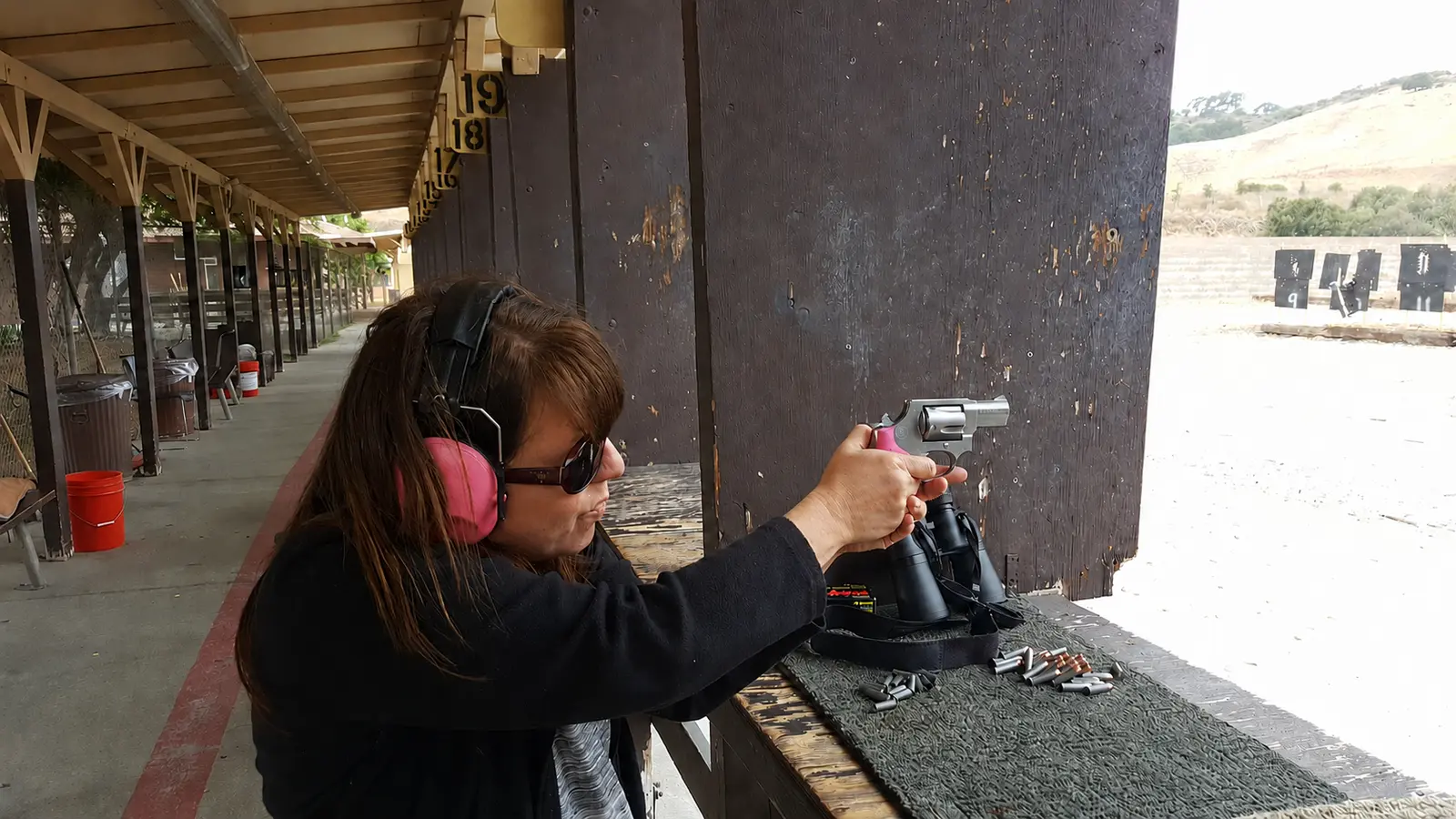
No two students see, move or handle a handgun exactly the same way. Effective instruction considers hand strength, firearm fit, experience, comfort and eye dominance.
This student is a right-handed, left-eye-dominant shooter practicing with a .38 Special revolver—a platform many women appreciate for its straightforward operation and comfortable fit.
Fire For Effect Training helps each student develop a safe, repeatable technique instead of forcing everyone into the same mold.
Practical Handgun Fundamentals
What You’ll Learn
Training is adjusted to your current experience and goals. Every session begins with safety and builds toward confident, repeatable handgun skills.
Safe Handling
Muzzle awareness, trigger-finger discipline, loading, unloading and responsible firearm handling.
Grip and Stance
A stable shooting position and effective grip adapted to your hands, strength and firearm.
Sight Alignment
Practical use of iron sights or handgun optics, including adjustments for eye dominance.
Trigger Control
Smooth, deliberate trigger operation that improves accuracy while maintaining safe handling.
Recoil Management
Techniques that help you maintain control and confidently deliver accurate follow-up shots.
Practical Application
Malfunction response, ammunition management and purposeful practice appropriate to your skill level.
See the Training
Clear Instruction. Purposeful Practice.
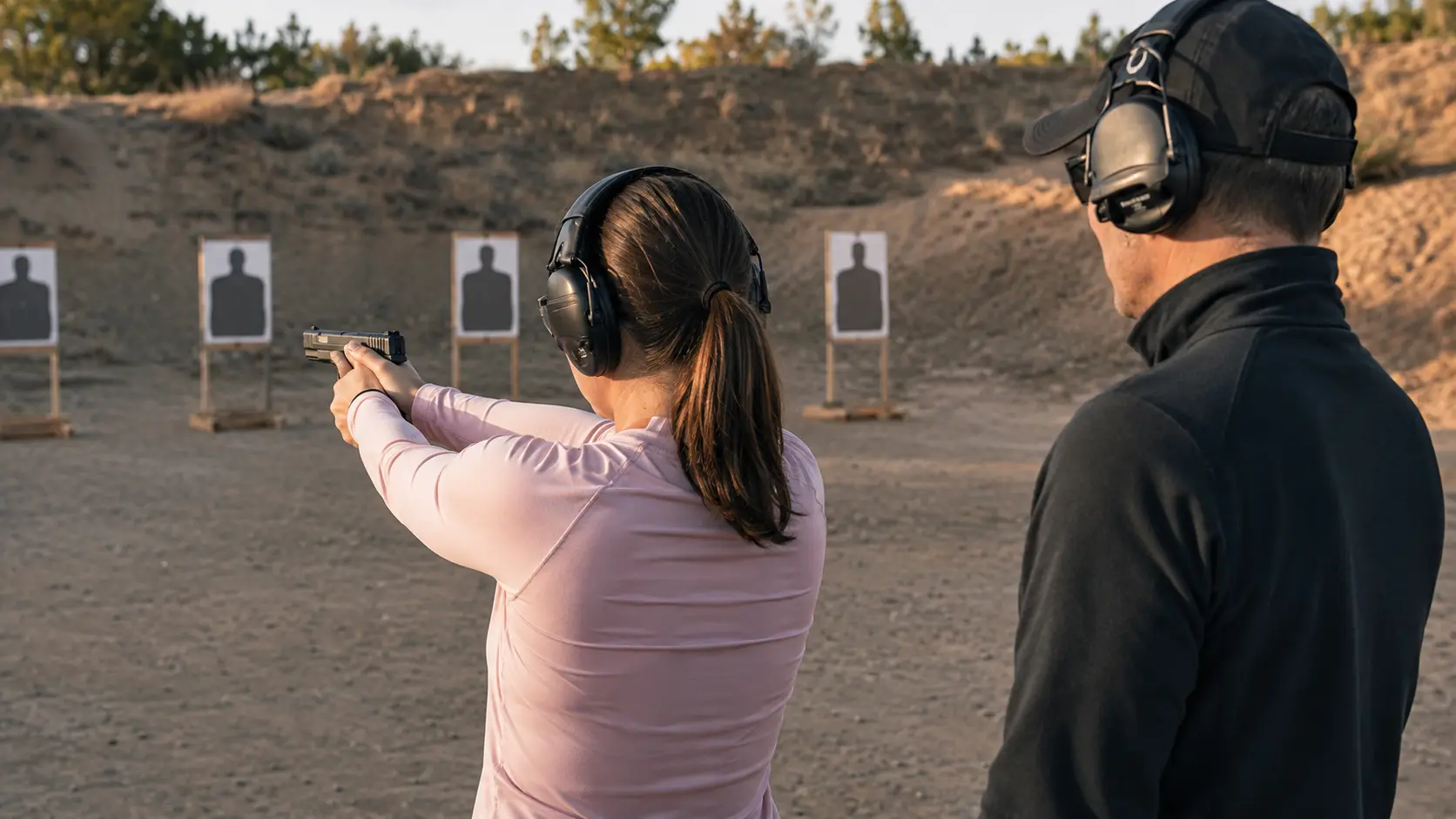
Strong handgun skills are built through careful instruction, deliberate repetition and useful feedback. Students learn why each technique works and how to practice it safely.
The handgun shown is a Smith & Wesson M&P Shield chambered in 9mm. It features a gold-nitrided barrel with barrel and slide porting designed to help manage muzzle rise and support faster, controlled follow-up shots.
Sessions are adapted to the student’s experience, firearm, comfort level and goals. The objective is not simply to fire more rounds—it is to make every repetition productive.
Safe. Disciplined. Deliberate.
Training for Real People
Who This Training Is For
Handgun training is adapted to your experience, comfort level and goals. You do not need prior experience or specialized equipment to begin.
First-Time Shooters
Learn safe handling and basic operation in a calm environment without pressure or intimidation.
New Handgun Owners
Understand your firearm and develop responsible habits before those habits become difficult to change.
Returning Shooters
Rebuild confidence and refresh fundamental skills after spending time away from handgun practice.
Defensive Handgun Owners
Strengthen firearm control, accuracy, ammunition management and responsible decision-making.
Women and Couples
Receive practical instruction adapted to firearm fit, hand strength, eye dominance and individual comfort.
Experienced Shooters
Identify weak points, correct inefficient habits and build more consistent, repeatable performance.
Understanding the Violent Mind

William Aprill
Defensive handgun training is about more than learning how to shoot. It also means understanding that a violent attacker may not think, reason or respond the way a normal, law-abiding person expects.
The late William Aprill was a mental health professional and respected personal-defense educator who spent years examining violent criminal actors, their motivations and the realities of criminal violence. His work challenges one of the most dangerous assumptions we can make in a defensive situation:
The person willing to hurt you may not think, value or behave the way you do.
Understanding that reality is an important part of responsible defensive preparation. Firearm skills matter, but awareness, judgment, mindset and the ability to recognize danger matter too.
Explore William Aprill’s Work →External educational resource: Personal Defense Network
Build Beyond the Fundamentals
Advanced Shoot-House Training
Once safe handling and dependable handgun fundamentals have been established, qualified students may progress to more challenging training in a controlled shoot-house environment.
This exercise begins with preparing an unloaded handgun, chambering a round and performing a press check to confirm chamber status. The shooter then moves through the shoot house while applying doorway-clearing, controlled-movement and target-identification principles.
The shooter uses the “slicing the pie” technique when approaching doorways and engages designated threat targets as the scenario develops. The exercise includes controlled pairs to center mass and appropriate follow-up engagement when the scenario indicates that the threat has not stopped.
The handgun shown is a Kimber Eclipse Custom II chambered in 10mm Auto—a powerful platform used here by an experienced shooter in a structured training environment.
Advanced training requires demonstrated safety, firearm control and sound judgment.
Start With a Conversation
Build Safer, More Confident Handgun Skills
Tell us about your current experience, the handgun you use and what you want to accomplish. We’ll help determine the most useful starting point for your training.
Individual and small-group instruction may be available based on training goals, range access and scheduling.
Ask About Handgun Training